Crypto Holders Get a Massive Warning in 2026 as Regulation Reshapes the Market
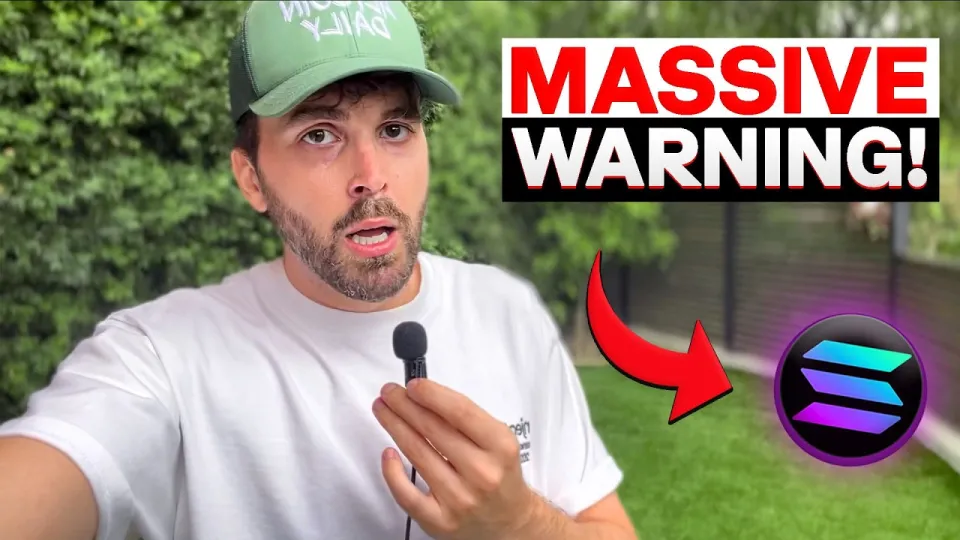
Video: My MASSIVE Warning To Crypto Holders
Need articles like this for your video? They help promote it on YouTube and Google — order them in the Telegram bot @sat_sit_bot. Articles with your video embedded are written and posted by the bot itself — on popular topical sites (no ads). Your first 50 articles are free.
· based on the channel Altcoin Daily
Key takeaways
- The core warning for crypto holders is regulatory and platform risk, not price volatility.
- Self-custody versus exchange custody is the central question every holder should answer.
- Coins with no dependence on a single jurisdiction are framed as more resilient in the discussion.
- Viewers repeatedly ask whether platforms like Robinhood and tokens like AAVE carry the same risk.
- The channel's argument is that the biggest risk is not holding crypto at all.
The warning for crypto holders in 2026 is not about a price crash — it is about regulation and custody. The core message is that the coins sitting on an exchange or a brokerage app are exposed to rules, restrictions and platform decisions you do not control, while self-custodied assets are not. If you want a place to start reviewing your own setup, the Weex welcome event with a $500 deposit bonus is one of the platforms promoted alongside the discussion.
What the crypto warning actually says
The warning is structural: the risk to crypto holders comes from the layer between you and your coins, not from the asset itself. Altcoin Daily frames the coming period as one where regulators, brokers and custodians make decisions that can change what you are allowed to do with a position — sell it, move it, or even hold it in the form you expect.
That reframing matters because most holders spend their attention on charts. The argument is that a holder who is right about direction but wrong about custody can still lose access to the upside. The practical takeaway is to separate two questions: what you own, and where it lives.
Self-custody versus exchange custody
Self-custody means the private keys are yours, so no platform policy, freeze or jurisdiction change can block access to the asset. Exchange custody means the opposite: the balance you see is a claim on a company, and that company operates under rules you did not write.
- List every venue where you hold crypto: exchanges, brokerage apps, custodial wallets, staking services.
- For each one, write down who can freeze the balance and under what conditions.
- Move the portion you are not actively trading into a wallet where you control the seed phrase.
- Keep the seed phrase offline and never enter it into a website or a support chat.
- Re-check the list whenever a platform changes its terms or adds a new regional restriction.
This is not an argument against using exchanges — it is an argument against treating an exchange balance as if it were a self-custodied coin.
Why coins with no single-jurisdiction dependence get mentioned
The discussion keeps returning to assets that do not depend on one company or one regulator to keep functioning. Bitcoin and Ethereum are the obvious examples, and viewers also raise Solana, Cardano, Zcash and newer names as candidates for the same reason: the network keeps running regardless of what any single authority decides.
The counterpoint is that "regulation-resistant" is not the same as "risk-free." A decentralized network can still be squeezed at the on-ramp and off-ramp — the exchanges and banks where fiat meets crypto. That is why the warning is aimed at holders rather than at protocols: the choke points are mostly at the edges of the system.
Typical questions from crypto holders
The most common doubts from viewers fall into a few recurring buckets, and each has a concrete answer.
- Does this apply to brokerage apps like Robinhood? Yes. A brokerage balance is custody by a regulated intermediary, so the same question applies: who can restrict it, and under what terms.
- Does a warning about platforms mean avoiding DeFi tokens like AAVE? No. The distinction is between holding a token and depositing assets into a protocol or a company. Understand which one you are doing.
- Why are some large coins rarely named? Coverage choices are editorial, not a signal about the asset. Judge the argument, not the ticker list.
- What if price falls below a round number? A drawdown does not change the custody question. Decide your custody setup before volatility forces the decision.
The strongest counterargument
A large share of the audience pushes back with a simple point: the biggest risk is not owning crypto at all. That is a fair challenge, and it does not contradict the warning — it sharpens it. If you believe the upside case, then the way you hold the asset matters more, not less, because being right about the market and locked out of your position is the worst combination.
The balanced version is: stay exposed, but hold through a structure you control. Exposure without custody discipline is a bet on someone else's compliance department.
How to act on the warning this week
Turn the warning into three concrete actions. First, audit custody: count how many of your positions sit behind a login rather than a seed phrase. Second, stress-test the answer: ask what you would do if a platform paused withdrawals for a month. Third, write the plan down, including which assets you would move first and where.
Holders who do this in calm conditions make better decisions than holders who improvise during a restriction. The point of a warning is to be early, not to be right after the fact.
Platforms and links mentioned
The discussion is accompanied by two promotional offers. Both are registration bonuses, not investment advice, and both carry the usual platform and counterparty risk described above:
Summary
Altcoin Daily's warning to crypto holders is about regulation and custody rather than price, and it lands hardest on anyone who treats an exchange balance as their own coins. The practical response is to separate what you own from where it is held, keep long-term positions in self-custody, and re-check the rules of every platform you use. Viewers who argue that the biggest risk is staying out of crypto are not wrong — they just underline why the custody question deserves an answer before the next restriction arrives. If you want to review one of the promoted venues for yourself, start with the Weex deposit bonus page and read its terms before depositing anything.
Source: My MASSIVE Warning To Crypto Holders · Markdown version
Questions & answers
Is the crypto warning about price or about regulation?
It is primarily about regulation and custody. The argument is that rules, platform policies and jurisdiction changes can restrict what a holder is able to do with a position, even if the market direction is correct. Price volatility is treated as a secondary concern.
Should I move all my crypto off exchanges?
Not necessarily all of it. The workable approach is to keep only what you actively trade on a platform and move long-term holdings into a wallet where you control the seed phrase. The key is knowing, for each balance, who can freeze it and under what conditions.
Do brokerage apps carry the same risk as crypto exchanges?
They carry a comparable custody question, because the balance is held by a regulated intermediary rather than by you. The specific rules differ, but the underlying issue is the same: access depends on a company's terms and the jurisdiction it operates in.
Does a warning about platforms mean DeFi tokens are safer?
No. Holding a token and depositing assets into a protocol or a company are different activities with different exposures. A decentralized network can still be constrained at the fiat on-ramps and off-ramps, so the custody question does not disappear.