Which Trading Path Fits a Beginner Best and Why Starting From Scratch Beats Copying Someone Else
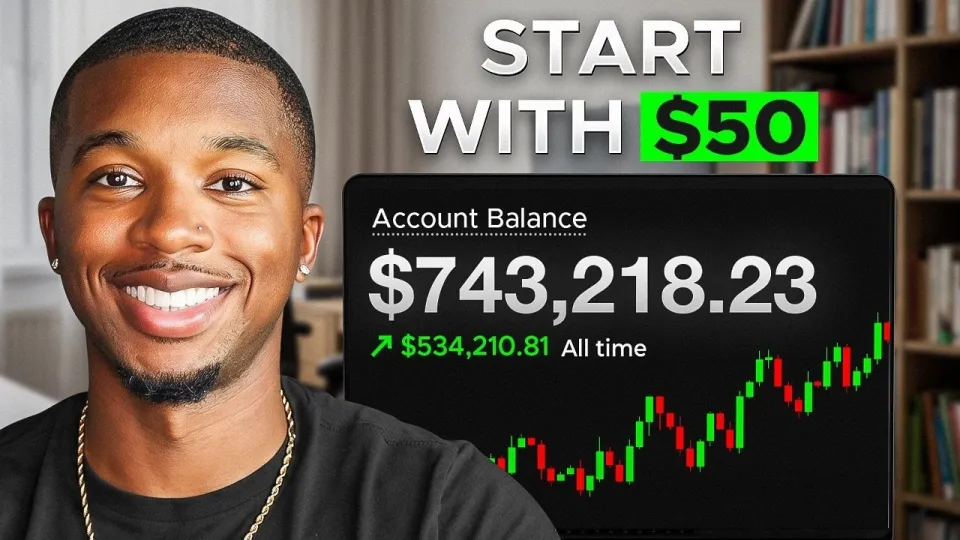
Video: Easiest Way To Start Day Trading From Scratch (Exactly What I Did)
Need articles like this for your video? They help promote it on YouTube and Google — order them in the Telegram bot @sat_sit_bot. Articles with your video embedded are written and posted by the bot itself — on popular topical sites (no ads). Your first 50 articles are free.
· based on the channel Jooviers Gems
Key takeaways
- Day trading means closing every position before the session ends, so you never hold overnight gap risk.
- Beginners usually choose between futures (CME micros like MES and MNQ) and forex pairs through a broker such as HeroFX.
- Prop firms let you trade firm capital after passing an evaluation; Jooviers Gems points viewers to The Edge Funder for instant funding.
- A realistic first goal is 1–2 setups traded on a demo or small account for 30 days before adding size.
- Journaling every trade in a tool like WAGMI Trader is how you find which setups actually pay you.
Day trading from scratch works best when you pick one market, one setup and one risk rule, then repeat them on a demo account until the process is boring. Futures micros such as MES or MNQ and major forex pairs like EUR/USD are the two most common starting points because they offer tight spreads, deep liquidity and small minimum size. If you want to follow the exact trades behind this approach, Jooviers Gems shares his positions through the Inner Circle, which is the fastest shortcut to seeing a real process instead of guessing.
What day trading actually is and what it is not
Day trading means opening and closing positions inside the same session, so you carry no overnight risk and no gap exposure. It is not a get-rich-quick scheme, and it is not passive income: the edge comes from repetition, statistics and risk control, not from a single lucky call. The reason beginners are drawn to it is simple — you can start with a few hundred dollars, a laptop and a broker account, and you can measure your progress in weeks rather than years. The reason most beginners quit is also simple: they trade too big, change strategy every week and never record what they did.
Choosing your first market: futures or forex
Your first market should be the one with the lowest cost per mistake, not the one with the biggest potential payout. Futures and forex both qualify, but they behave differently.
- Futures — CME micro contracts (MES tracks the S&P 500, MNQ tracks the Nasdaq 100) let you control real index exposure with a few hundred dollars of margin. Commissions are fixed per contract, the exchange is centralized and volume is visible, which makes reading price action easier for a beginner.
- Forex — pairs such as EUR/USD or GBP/USD trade nearly 24 hours a day, and brokers like HeroFX offer micro lots so a single pip is worth cents. The trade-off is that currency moves are driven by macro news, and spreads widen around releases.
- Stocks — commission-free brokers made share trading popular, but the pattern day trader rule in the US requires $25,000 in an account to day trade equities more than four times in five business days.
Pick one, and stay with it for at least three months. Switching markets every week resets your learning curve to zero.
How prop firm funding changes the math for small accounts
Prop firms solve the biggest beginner problem, which is that a $500 account cannot produce meaningful income even with a good strategy. In the prop model you pay an evaluation fee, prove you can hit a profit target without breaking the drawdown limit, and then trade the firm's capital while keeping a share of the profits. Jooviers Gems points viewers to The Edge Funder for instant funding, and the appeal is obvious: a funded account of $25,000 or $50,000 turns a 1% monthly return into real money. The catch is discipline — most evaluations are failed not because the strategy is bad, but because the trader risks 5% on a single trade and blows the daily loss limit. Treat the drawdown rule as your hard stop, not as a suggestion.
A beginner routine you can run for 30 days
A repeatable routine beats a clever indicator, because it removes decisions from the moment when emotions are highest. The structure below is what most self-taught traders converge on after a year of trial and error.
- Pre-market, 20 minutes: mark the previous day's high, low and close, note the economic calendar, and write down the one setup you are allowed to trade today.
- First 30–60 minutes of the session: watch, do not click. The opening range sets the reference levels you will use later.
- Trade window: take a maximum of two trades, each risking 0.5%–1% of the account, with a predefined stop and target.
- After the close: screenshot every trade and write one sentence about why you entered and how you felt.
- Weekly review: count wins, losses and average win/loss size, then delete the setup with the worst expectancy.
A demo account is not a downgrade — one viewer in the comments reported crossing $8,000 on demo including losses before going live, which is exactly the right order of operations.
Risk rules that keep a small account alive
The single rule that separates traders who survive their first year from those who do not is position sizing. Risk a fixed fraction of the account on every trade, never more than 1%, and size the position from the stop distance rather than picking a contract count you like. Set a daily loss limit — typically 2%–3% — and stop trading when you hit it, because revenge trading after a bad morning is what turns a red day into a blown account. Keep a separate emergency buffer outside the trading account so a bad week never touches rent money. One commenter mentioned being let go from a six-figure job; the lesson is that trading income should be built as a second skill, not as a replacement for a paycheck you still need.
Journaling and measuring progress honestly
A trading journal is the only objective feedback loop you have, and without it you are just memorizing your last few trades. Record the instrument, session, setup name, entry, stop, target, result in R multiples and a short note on execution quality. After 50 trades you will see which hours and which setups actually produce your profit, and the answer is usually narrower than expected — often one setup in one session window. Tools such as WAGMI Trader are built for exactly this, and a spreadsheet works just as well if you fill it in every day. Track your process metrics too: percentage of trades taken according to plan, average risk per trade and number of rule breaks per week.
Common beginner doubts and what they really mean
Most doubts beginners raise are about time, money and comparison, not about strategy. If you are still on demo after a month, that is normal — the transition to live money should happen when your journal shows a stable process, not on a calendar date. If your account is small, prop firm funding or micro contracts are the practical answer, not leverage on a $100 account. If you feel behind because of what you see on social media, remember that screenshots of wins are marketing and losses are rarely posted. And if you have never traded anything before, start with the smallest size that still feels real, because simulated money teaches mechanics but not emotions.
Useful links
- Inner Circle — all trades from Jooviers Gems: https://www.getgemify.com/innercircleo?el=youtube_organic
- The Edge Funder — instant funding for traders: https://www.theedgefunder.com/
- The Edge Funder Discord community: https://discord.gg/WpJXHKK7f2
- Instagram: https://www.instagram.com/joovier_
- Recommended forex broker HeroFX: https://herofx.co/joovier/
Final thoughts on starting trading from scratch
The easiest way to start day trading is not a secret indicator but a narrow process: one market, one setup, fixed risk and a journal you actually fill in. Futures micros and major forex pairs give beginners enough liquidity and small enough size to learn without gambling, and prop firm funding is the realistic bridge from a small account to meaningful capital. Expect the first months to be about repetition and record-keeping rather than profit, and treat every rule break as data. The breakdown above follows the beginner-focused teaching of the Jooviers Gems channel, which walks through the same steps in its video on starting day trading from scratch. If you want to see how the process looks in live trades, join the Inner Circle and compare your own journal against real positions.
Source: Easiest Way To Start Day Trading From Scratch (Exactly What I Did) · Markdown version
Questions & answers
How much money do I need to start day trading?
You can open a futures or forex account with a few hundred dollars, but that amount will not produce meaningful income. A practical path is to learn on a demo account first, then use a prop firm evaluation to trade firm capital, or trade micro contracts until your journal shows a consistent process.
Is demo trading a waste of time?
No, demo trading is where you build mechanics and test a setup without financial damage. The limitation is emotional: simulated money does not trigger the same fear as real money, so plan a gradual switch to small live size once your process is stable.
Should I trade futures or forex as a beginner?
Futures micros such as MES and MNQ offer centralized volume, fixed commissions and easy price-action reading, while forex offers 24-hour access and very small position sizes. Choose the one whose session fits your schedule and stay with it for at least three months.
How long before I become profitable?
Most self-taught traders need six to twelve months of consistent screen time, journaling and backtesting before results stabilize. Progress is measured by rule adherence and expectancy per trade, not by monthly profit in the first few months.